
Aomori Fish Market: Community and Tourist Buy in
Dear Friend,
It's been quite a while since I've seen you. I hope these past few weeks have been treating you well.
As you may or may not know, my brother and I have spent the last few weeks traveling around the wonderful country of Japan. Fortunately and unfortunately, Japan has become the darling of every social media influencer, and therefore every social media follower; and because of this, the usual suspects of Tokyo, Kyoto, and Osaka were looking significantly less appealing. In a mildly pejorative show of rebellion, we decided to only focus on the northern Kansai region. It turned out to be a good choice, especially because we happened to be there during one of the peak festival seasons (July-August). Luckily for us, one of the three biggest summer festivals in Japan happened to fall within the dates of our trip: the Nebuta Festival. The Nebuta festival is incredible. I wish you could have been there to see it my friend. The music, the people, the floats, the food. All astonishing to say the least. But, alas, I have discussed this in a previous letter.
Apologies for the longwinded-ness. It's been a while. I'm writing to you on this fine day to discuss absolutely nothing relating to the festival, save that we were in Aomori on this fateful afternoon. This letter is about the Aomori fish market.
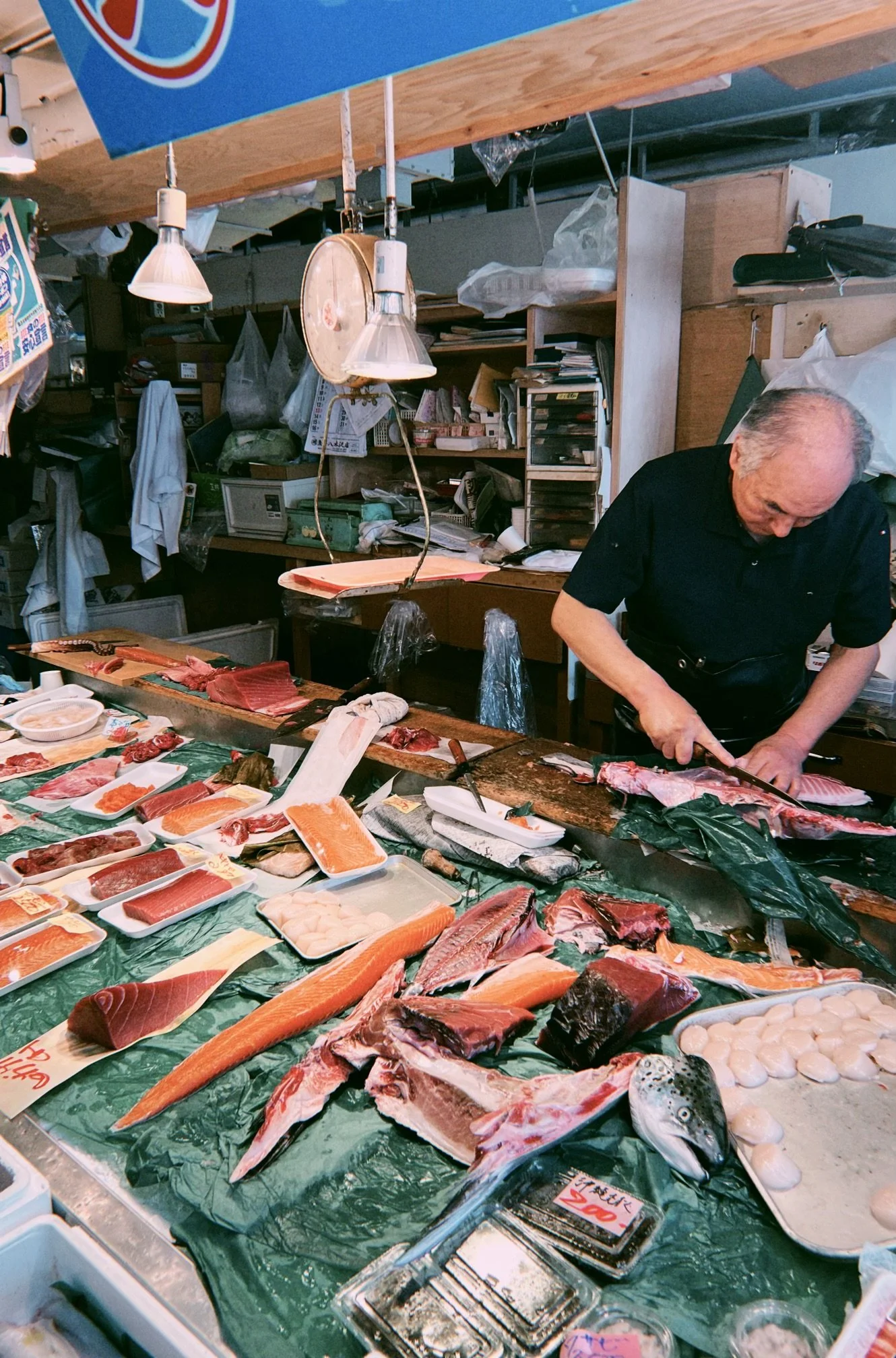
Aomori is a fishing town. With a population of only ~250,000 in the city itself, it is relatively small as far as Japanese cities go. Aomori itself is famous for its fish. Located on the coastline of Mutsu bay, its prime location and heavy exports give it an industrial feel. Because of this, it's no surprise that it is a prime location for fish markets. Not the frilly version you can easily find in grocery stores around the US, but true, fresh, fisherman sold goods. Usually, markets like this would be frequented by chefs and home cooks looking to stock their restaurants and refrigerators for the next few days. This fish market, however, is filled with something quite different: both tourists and locals gearing up for lunch.
Why?
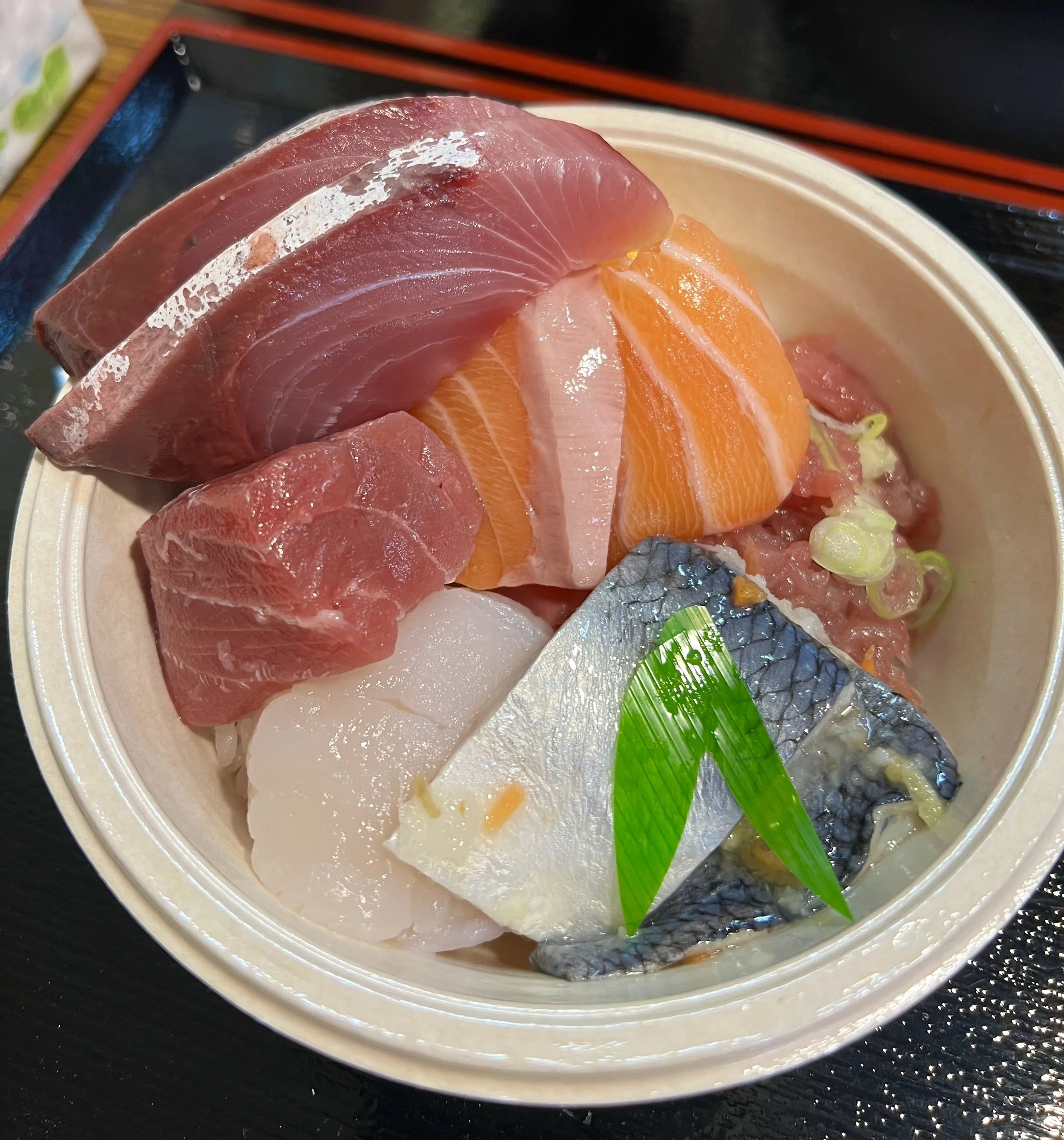
The Aomori fish market has done something incredibly simple, yet genius. The market organizers themselves have installed a system. The core of this system are two stalls run by the market itself, one on each side. Each of these stalls only sells three things. One: beer. Two: bowls of rice. Three: tickets. There are two sizes of rice, regular and large (they give you a ticket to denote the size here as well). The non-rice tickets come in sets of 12. I've only ever seen people purchase 12 or 24. I got 24 tickets and the regular bowl of rice and it ran me about 14 dollars in total. These tickets are then used as you walk around the market with your steaming bowl of rice and peruse the stands. The difference between these stands and the stands of your local fish market (if you have one), is that these fish markets have taken their fresh sashimi grade fish, and instead of only selling chunks of fish, also slice up small individual portions to trade for these tickets. This allows people to walk around, get three slices of salmon belly here, a fresh scallop there, pickled veggies, maybe a scoop of salmon roe. By the time you make it to the simple tables and stools, maybe precariously balancing a beer on your tray, your rice bowl is stacked to the brim with fresh caught sashimi.
Not only does this give the purveyors an additional source of income (turns out not everyone is interested in buying $60 of raw fish), it turns the market into a destination instead of only a place to stock your fridge. When we visited, it was slammed with a mix of people enjoying the food, shopping for their restaurants, and myriad tourists. It's also an impressive feat of unity on the part of the market. It does involve extra labor, and it's something that requires the participation of all vendors to pull off. No easy feat. I'm sure an added benefit is the fisherman get to actually see and hear people enjoying their product, something most wouldn't be able to experience. Would you not want the same my friend?
So here, my friend, is a question. As I walk through fish and farmer's markets in Portland, New York, Los Angeles, Seattle and San Francisco, I think back to Aomori. How many people would love to spend their afternoon eating, socializing, and drinking at their local market? I'm sure it is the minority that share my hobby of strolling through the market with no real intent to buy. Now how would that change were these markets to embrace the method from the Aomori fish market? Why couldn't these stands do the same thing? Maybe it lacks the cohesiveness of the chashu-donburi that can easily be made at fish markets, but nonetheless it is possible. Imagine buying a set of tickets at a normal farmers market. You begin to stroll the stands, on your left you find a chocolatier offering a hot chocolate for two tickets, next to that stands a farmer offering hot soup. Further down the road, you see a cheesemaker offering a sampling of his favorite cheeses for three tickets. Pickled vegetables, dried sausage, hot oatmeal with a stand’s home harvested maple syrup drizzled over it. There are so many options, and with a bit of guidance, even a normal farmers market can transform itself into a destination from simply a store. The only thing necessary? Community buy in and a little bit of organization.
Wishing you well,
Best of Kin